
Monday, December 14, 2009

Samantha and Kelsey's Senior Project


Fruit Yogurt Parfait


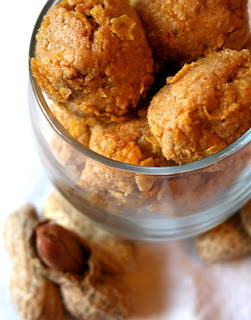
Peanut Butter Balls


Lemon Ginseng Tea


Oatmeal Cranberry Cookies


Chicken Quesadilla and Black Bean Salsa


Goat Cheese Pizza


House Salad


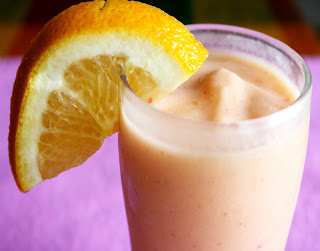
Fruit Smoothie

Artist Statement

By: Kelsey Murphy & Samantha Garrity

Organic food: produced according to certain production standards. Pesticides, insecticides and herbicides are greatly restricted in production.

The world organic market has been growing by 20% a year since the early 1990’s with future growth estimates ranging from 10%-50% annually depending on the country. According to Henry’s Farmers Market, "Certified Organic" means the item has been grown according to strict federal standards that are verified by independent state or private organizations. Certification includes inspections of farm fields and processing facilities, detailed record keeping, and periodic testing of soil and water to ensure that growers and handlers are meeting the standards that have been set. Organic food is certified and traced from the farm to our stores. Certification organizations are accredited by the U.S. Department of Agriculture (USDA).”

Many people think that organic food is more expensive than your average grocery store, but according to an Australian study by Choice Magazine in 2004, they discovered that processed organic foods in super markets are to be 65% more expensive than organic farmers markets. After comparing prices at our local Vons and Trader Joe’s, and farmer’s markets and we found this to be true. This may be the reason why people are reluctant to buy organic foods, along with the fact that a lot of people are unaware of the actual costs.

Since organic foods are limited to pesticides, insecticides and herbicides, you’re getting slim to none of these harmful chemicals. Trader Joe’s meat and poultry products prohibit the use of hormones by the USDA. Hormones are artificial steroids that make animals gain weight fast while reducing the amount of food they eat producing more meat or poultry. Today, more than 80% of the cattle are raised by using artificial hormones. Zeranol and Estradiol hormones can be harmful to humans causing cancer and other related illnesses. The Emory University's School of Public Health conducted a study of pesticides in everyday foods that monitored the diets of a group of local children. The study found that the “urine and saliva of children eating a variety of conventional foods from area groceries contained biological markers of organophosphates, the family of pesticides spawned by the creation of nerve gas agents in World War II.” Within eight to 36 hours of the children switching to organic food, the pesticides were no longer detected in the testing.

While the organic food market continues to grow, people are becoming aware of these healthy options and their lower costs. By completing this project we hope to inspire society to make healthier choices in their diet and daily lifestyle.

Sources:

"Organic Trade Association." Organic Trade Association. N.p., n.d. Web. 18 Nov. 2009. .

"Henry's Farmers Market - Organic Commitment." Henry's Farmers Market Home. N.p., n.d. Web. 18 Nov. 2009. .

"Organic food - Wikipedia, the free encyclopedia." Wikipedia, the free encyclopedia. N.p., n.d. Web. 18 Nov. 2009. .

"Welcome to Trader Joe's - Your Neighborhood Grocery Store - Product FAQs." Welcome to Trader Joe's - Your Neighborhood Grocery Store - Aloha!. N.p., n.d. Web. 18 Nov. 2009.

Jathar, Rutuja. "Hormones in Food." Buzzle Web Portal: Intelligent Life on the Web. N.p., 17 Aug. 2009. Web. 18 Nov. 2009. .

SCHNEIDER, ANDREW. "Harmful pesticides found in everyday food products." Seattle news, sports, entertainment | seattlepi.com - Seattle Post-Intelligencer. N.p., n.d. Web. 18 Nov. 2009. .

Tuesday, December 1, 2009

Stop Motion Flower/s

Mine was harder to discuss the origin and nutrition about my stop motion flower/s because I used something called "Flower Garden Mix" which is a variety of annual wide range of flowers.
All I know about these flowers is that there grow well between the months of september-february and I believe they are American seeds.

One of the flowers seems to be a zinnia elegan which is native to tropical America. Another flower that seems to bee in the garden mix is the dahlia. The dahlia was originally found by a group of adventurers and soldiers in the 16th century in what was to become Mexico.

Thursday, November 19, 2009

Samantha and Kelsey Artist Statement

Senior Project Essay
Kelsey and Samantha

Organic food: produced according to certain production standards. Pesticides, insecticides and herbicides are greatly restricted in production.
The world organic market has been growing by 20% a year since the early 1990’s with future growth estimates ranging from 10%-50% annually depending on the country. According to Henry’s Farmers Market, "Certified Organic" means the item has been grown according to strict federal standards that are verified by independent state or private organizations. Certification includes inspections of farm fields and processing facilities, detailed record keeping, and periodic testing of soil and water to ensure that growers and handlers are meeting the standards that have been set. Organic food is certified and traced from the farm to our stores. Certification organizations are accredited by the U.S. Department of Agriculture (USDA).”
Many people think that organic food is more expensive than your average grocery store, but according to an Australian study by Choice Magazine in 2004, they discovered that processed organic foods in super markets are to be 65% more expensive than organic farmers markets. After comparing prices at our local Vons and Trader Joe’s, and farmer’s markets and we found this to be true. This may be the reason why people are reluctant to buy organic foods along with the fact that a lot of people are unaware of the actual costs.
Since organic foods are limited to pesticides, insecticides and herbicides, you’re getting slim to none of these harmful chemicals. Trader Joe’s meat and poultry products prohibit the use of hormones by the USDA. Hormones are artificial steroids that make animals gain weight fast while reducing the amount of food they eat producing more meat or poultry. Today, more than 80% of the cattle are raised by using artificial hormones. Zeranol and Estradiol hormones can be harmful to humans causing cancer and other related illnesses. The Emory University's School of Public Health conducted a study of pesticides in everyday foods that monitored the diets of a group of local children. The study found that the “urine and saliva of children eating a variety of conventional foods from area groceries contained biological markers of organophosphates, the family of pesticides spawned by the creation of nerve gas agents in World War II.” Within eight to 36 hours of the children switching to organic food, the pesticides were no longer detected in the testing.

Sources:
"Organic Trade Association." Organic Trade Association. N.p., n.d. Web. 18 Nov. 2009. .

"Henry's Farmers Market - Organic Commitment." Henry's Farmers Market Home. N.p., n.d. Web. 18 Nov. 2009. .

"Organic food - Wikipedia, the free encyclopedia." Wikipedia, the free encyclopedia. N.p., n.d. Web. 18 Nov. 2009. .

"Welcome to Trader Joe's - Your Neighborhood Grocery Store - Product FAQs." Welcome to Trader Joe's - Your Neighborhood Grocery Store - Aloha!. N.p., n.d. Web. 18 Nov. 2009. .

SCHNEIDER, ANDREW. "Harmful pesticides found in everyday food products." Seattle news, sports, entertainment | seattlepi.com - Seattle Post-Intelligencer. N.p., n.d. Web. 18 Nov. 2009. .

Friday, November 6, 2009

Final Layout Essay

Layout Essay Kelsey Murphy
10/12/09
Everyone knows that food is a necessity to survive. But what most people don’t know is what’s in the food they’re eating or where it comes from. For example, I don’t always pay attention to what I’m eating or what could be in it that could be causing some kind of disease from the pesticides. Although this is an intense issue in the cycle of food processing, I find myself more interested in where our food comes from and the process of its shipment. Because do we really know? The US is known for a supplying a good amount of food to Americans. After all we are the fattest nation. Even the video “Fed Up” mentioned how the US is over producing food and it’s not being distributed enough.
We always find ourselves hearing about starving children on the news while we sit in front of our TV eating Big Macs and drinking out Super Gulps. In my opinion I feel we’re being rather stingy and selfish about our food and that it should be evenly distributed throughout the world so starvation won’t exist. I honestly don’t believe that it would be that hard to ship some food over to another country. Yes it may be expensive to bring over, but there has to be a way to get around the cost. Maybe I’m wrong. But we’ll never know till we try.
My special assignment group in environmental science is Garden Layout. A part of garden layout is the different types of farming such as monocultures and polycultures.

Monoculture is where one crop is grown and produced over a large area of land from a different variety of farmers. While polyculture is multiple crops in the same space with much more diversity of natural farming. Some diversity of polyculture is having a better variety of food to grow and sell. Farmers involved in polyculture are also more likely to travel with their food to sell it at places such as the Farmers Market. From both the movie “Fed Up” and the reading we were assigned in class, it had mentioned how growing smaller community gardens would bring together more organic farming and healthier people, as well as saving money. Even though this is a good idea, there are places such as New York where people cannot and will not find a place to farm their vegetables and fruit. This is causing people to do what’s convenient for them, which is driving to the nearest grocery store and buying their more so unhealthy food.
Something that had also surprised me was how in the reading from class it said “The America people are paying more attention to food today than they have in decades, worrying not only about its price but about it’s safety, it’s provenance and its healthfulness.” Is this a fact? I want to know what resources they used. Because even if it is, I don’t see many people caring about what they eat or whether or not their food is good for them. So maybe the author should think twice because “paying attention” is obviously misleading in my opinion. According to the EPA (Environmental Protection Agency), “Before a company can sell or distribute any pesticide in the United States of America, EPA must review studies on the pesticide to determine that it will not pose unreasonable risks to human health or the environment.” I thought that this was interesting because we still hear about these different diseases that are caused by pesticides such as, brain cancer, Parkinson’s disease, leukemia, lymphoma, cancers of the stomach, prostate and more. If these are still occurring after the EPA has “reviewed” the health of our food, how can we trust them and the food we eat? Not only is it a health hazard to people, animals, and even soil, but most importantly the younger generation. As their bodies grow then need the right nutrients, but instead they are eating processed food that has chemicals and their hormone cycle can become destroyed leading to an unhealthy life as they get older.
Once pesticides are used in farming, it spreads through the soil and is there to remain for the future generations. Even after rainfall those chemicals from the fields can be washed into rivers. It’s also good to be thinking about what the water is not only doing to us but how it affects the air and further pollution finally leading us to running out of water. Since there are no pesticides in organic farming, not only is it keeping us healthier, but also it’s not polluting our water.

Although it may seem like organic farming is the best, there are some down sides to it like low productivity. Another well-known con against organic farming is the price. Most organic grocery stores prices can range from 50-100 percent more than a traditional grocery store, which not everyone can afford in this economy. This brings me to my senior project because my partner and I will be creating a broacher with information on where you can buy organic/healthy food at a decent price since it seems to be an issue for many people. We also plan on taking lots of high quality pictures of the organic food we make, and even having a map of where you can eat healthy in San Diego for a cheap decent or fair price. I feel there is no doubt that organic farming is the better way to go considering the pros overrule the cons, but people should always know there is alternatives to eating healthy if money becomes a huge issue.

Sources:
*http://www.epa.gov/opp00001/food/govt.htm
How the Government Regulates Pesticides | Pesticides | US EPA U.S. Environmental Protection Agency
* http://ask.metafilter.com/98669/Could-we-feed-the-current-world-population-using-purely-organic-farming-methods Could we feed the current world population using purely organic farming methods? | Ask Metafilter
Ask Metafilter | Community Weblog
* http://www.grinningplanet.com/2006/update-2005-05-24/pesticides-in-food.htm
Pesticides in Food Clean Funny Cartoons / Environmental Issues ... on Grinning Planet
*http://progressreport.cancer.gov/doc_detail.asp?pid=1&did=2007&chid=71&coid=713&mid
Cancer Trends Progress Report – Pesticides
*http://www.toxicsinfo.org/Lawn/Pesticides%20&%20Cancer.htm
Pesticides and Cancer
Toxics Information Project Front Page
Gwen Petreman

Wednesday, October 21, 2009

Senior Project Research

Where does the produce from Vons come from?
I had earlier read that is very difficult to track down where produce comes from in grocery stores online. I myself, had that same problem. I could not track down where Vons produce comes from in San Diego.


http://www.vons.com/IFL/Grocery/Product-Recalls
Vons - product recalls - us
Vons - Find a store near you
10/21/09
I thought this would be the most helpful out of all the websites i found, but it really didn't help too much on what i needed to know. It had a short summary about Peanut butter and where it's made, but that's also not what i exactly wanted to know.

http://www.answers.com/topic/the-vons-companies-incorporated
The Vons Companies, Inc.: Information from Answers.com
Answers.com - Online Dictionary, Encyclopedia and much more
10/21/09
This had more of an overview about Vons and where it's come from since 1906. Although i thought there was still some interesting things to know in this article.

Sunday, October 18, 2009

Food around the world
Kelsey Murphy
10/12/09

Everyone knows that food is a necessity to survive. But what most people don’t know is what’s in the food they’re eating or where it comes from. Like myself, I don’t always pay attention to what I’m eating or what could be in it that could be causing some kind of disease from the pesticides. Although this is an intense issue in the cycle of food processing, I would like to discuss more about where our food comes from and where it’s going in my intro. Because do we really know? The US is known for a supplying a good amount of food to Americans. After all we are the fattest Nation. Even “Fed Up” mentioned how the US is over producing food and it’s not being distributed enough.

We’re always hearing about starving children on the news while we sit in front of our TV eating Big Macs and Super Gulps. In my opinion I feel we’re being rather stingy and selfish about our food and that it should be evenly distributed throughout the world so there wont have to be such a thing as starving. I honestly don’t believe that it would be that hard to ship some food over to another country. Yes it may be expensive to bring over but there has to be a way to get around the cost. Maybe I’m wrong. But we’ll never know till we try.

My special assignment group is Garden Layout. A part of garden layout is the different types of farming such as monocultures and polycultures. Monoculture is where one crop is grown and produced over a large area of land from a different variety of farmers. While polyculture is multiple crops in the same space with much more diversity of natural farming. Farmers involved in polyculture are also more likely to travel with their food to sell it at places such as the Farmers Market. From both the movie “Fed Up” and the reading we were assigned in class, it had mentioned how growing smaller community gardens would bring together more organic farming and healthier people. As
well as saving money. Even though this is a good idea, there are places such as New York where people cannot and will not find a place to farm their vegetables and fruit. This is causing people to do what’s convenient for them, which is driving to the nearest grocery store and buying their more so unhealthy food.

According to the EPA, “Before a company can sell or distribute any pesticide in the United States of America, EPA must review studies on the pesticide to determine that it will not pose unreasonable risks to human health or the environment.” I thought that this was interesting because we still hear about these different diseases that are caused by pesticides such as, brain cancer, Parkinson’s disease, leukemia, lymphoma, and cancers of the stomach and prostate. . If these are still occurring after the EPA has “reviewed” the health of our food, how can we trust them and the food we eat? Not only is it a health hazard to people, animals, and even soil, but mostly importantly the children. As their bodies grow then need the right nutrients, and with the different chemicals they’re eating, their hormone cycle can become messed up leading to an unhealthy life as they get older. Once pesticides are used in farming, it spreads through the soil and is there to remain for the future generations. Even after rainfall those chemicals from the fields can be washed into rivers. So since there are no pesticides in organic farming, not only is it keeping us healthier, but also it’s not polluting our water.

Although it may seem like organic farming is the best, there are some down sides to it like low productivity. Another well-known con against organic farming is the price. At most organic grocery stores prices can range from 50-100 percent more than a traditional grocery store, which not everyone can afford in this economy. I think this relates a lot to my senior project because my partner and I will be creating a broacher with information on where you can buy organic/healthy food at a decent price since it seems to be an issue for many people. We also plan on taking lots of high quality pictures of the organic food we make, and even having a map of where you can eat healthy in San Diego for a cheap decent price. I feel there is no doubt that organic farming is the better way to go considering the pros overrule the cons, but people should always know there is alternatives to eating healthy if money becomes a huge issue.


*http://www.epa.gov/opp00001/food/govt.htm
How the Government Regulates Pesticides | Pesticides | US EPA
U.S. Environmental Protection Agency
* http://ask.metafilter.com/98669/Could-we-feed-the-current-world-population-using-purely-organic-farming-methods
Could we feed the current world population using purely organic farming methods? | Ask Metafilter
Ask Metafilter | Community Weblog
* http://www.grinningplanet.com/2006/update-2005-05-24/pesticides-in-food.htm
Pesticides in Food
Clean Funny Cartoons / Environmental Issues ... on Grinning Planet

Friday, October 9, 2009

Annotated Bibliography

www.rocfund.org/blogs/michael-r-rdimock-s-blog/california-mayors-newsom-and-dellums-challenge-nations-cities-on-food-and-farming-2
California Mayors Newsom and Dellums Challenge Nations cities on Food and Farming - Roots of change
Home-Roots of change

www.sdfoodnotlawn.com/1in10.php
San Diego Food not lawns
Sustainable Food and Food Justice/Security for San Diego
Community Garden Campaigns "Take Action"
"1 in 10 for 2010" promotes policies leading to local food shed sustainability in San Diego through advocacy,education, and organizing.
Food Waste composting and green waste recycling program.

Wednesday, October 7, 2009

Socratic Seminar Reflection

I thought that today was an overall successful discussion towards the article we read, but it definitely could have gone deeper in thought and more interesting. There we're a lot of good points made, and having different view points/opinions really made the topic more interesting. It made people want to jump in and say something rather than sitting back and listening.
The point that I had made was towards someone else's point when they had said we need to educate the students in school so they can go back home, and tell their parents to "start being eco-friendly" or "start a garden." I disagreed because I know personally as a student learning about gardening, I don't want to go home and change my everyday lifestyle just to grow some vegetables or save some of my shower water to water plants. I know i had said earlier that i don't really care about the food i eat or the prices of gas and etc. but it's not necessarily that at all. I had just miss spoken. Another student had made a point how it's not the fact that we don't care, it how we don't have the resources or time. We had talked about 14% of the food we eat goes to waste, so why not save the food, put into a separate bin (like recycling), and what if we had a compost truck come pick it up?
And the students who "don't care" or are "lazy" like myself, agreed that they would save the food we don't eat and would put it outside for the compost truck to come pick it up (if we had one).
There was also something in the reading that i had thought kind of contradicted itself. He mention how this is the first time in generations that America has actually cared about food. Not only the prices, but the health of it. BUT i thought to myself, and America is also known for being the fattest Nation. So if we really cared about the food we eat that much, wouldn't we be eating healthier? or trying to buy good food for a good price? Because when you go through the drive-thru, you don't stop and ask about the calories and fattening in the food you ordered; you grab it and go. It's also cheap and convenient which seems to be a big thing for America.
Maybe i'm wrong or read it wrong. It's just something that caught my eye.

Wednesday, September 30, 2009

"Best Practices" Garden Layout

For our group our main goal is to make sure the plants grow the right way and keep all information organized. We plan on doing this by keeping track of the dates that the plants/vegetables are grown, and it's overall completion.
We also researched some of the vegetables so we could know how far of a distance they needed to be planted from any other plant then recorded our answers onto a typed document.

Monday, September 21, 2009

Stop Motion Plant/flower

The flower that i would like to grow is a carnation because
a. it grows well in the winter
b. i wanted to do a flower rather than a plant so i thought that the carnation would be a good choice.
c. and it's easy to grow.

Monday, September 14, 2009

Senior Project Idea

During the class discussion i thought that Food was the most important out of the 7 different topics. 4) Food: Something that unites us all. Our food systems are there to feed the world...Is industrial agriculture a necessary means to this end, or is there a way that is more balanced to help maintain the earth's natural systems? Is organic enough to be sustainable? What is necessary to ensure benefits to the environment, the world's economy and equity among our communities?
Food was my topic and throughout the research that my group and I found, there was a lot of new information that I did not know about before.


For my senior project I was hoping to incorporate all the 7topics we have discussed in class, into some kind of video. I was hoping to try and send a message without having any vocals or writing in the video. It would be just video clips/photography and music to go along with it.
I still need to talk it over with my partner but hopefully it will turn out to be a good idea.

Friday, September 4, 2009

Initial Plant Research


Environmental Science

Kelsey Murphy

9/3/09

1. Strawberries

2. Daises

3. Watermelon

Strawberries are a fruit grown from the soil of any traditional bed. They are usually grown in the late spring and need full sun or at least 6hours to produce the best crop. It takes approximately three weeks for the strawberry to show growth and ripeness. They need to be separated from weeds and 1-2 feet apart from other plants. Fertilizing the strawberries is also very popular before and after harvesting. Having the site that strawberries will be grown need to be well-drained and the beds should be away from the roots of any nearby trees so it will not interfere with the fruit. There are over 200 different pests that are known to invade on strawberries, but hopefully if the right amount of care is put into them, it wont be too much of a problem. Approximately one cup of strawberries contains 45 calories as well as an excellent source of vitamin C.

Fun Fact: Strawberries are the only fruit with seeds on the outside.

Daises are considered to be one of the easiest flowers to grow. They are grown from a seed and can be planted directly into the soil of the flowerbed. They need a good amount of sunlight, but if the daisies are planted into an area where it is too hot, it should bet provided with some shade. The soil should be rich with lots of nutrients. Like the strawberries, it’s a good idea to use fertilizer to encourage healthy growth. As the daisies start to grow/bloom they will need to be separated by hand to avoid “choking”. Fortunately bugs are not drawn to daisies to keeping them maintained is a rather simple. When planting the flowers, the soil needs to be as deep as 12 to 15 inches. This flower consist of many different colors such as the original daisy with white petals and a yellow center, orange petals, pink petals, orange petals, and more.

Fun Fact: Daisy leaves are edible and can be used in salads.

Environmental Sciece First Blog

What are you most interested in learning about in the natural world?

In the natural world I am most interested in the human race, and how the body works. I also am interested in the relationship between animals and humans.

Monday, June 1, 2009

Magazine Reflection

What did you learn?
Throughout this long lasting humanities project I had learned so much not only about my own writing, but making someone's writing better. We had learned everything from structure, punctuation, grammar, transitioning, and even your layout. For me, I feel that I learned a lot based on laying out my writing and how placing a paragraph or even the sub-headline can be so important. What I also learned that didn't have so much to do with my writing, was my internship itself. As I mention in my Photo Essay, I discuss how much responsibility it takes to become involved in the real world as an employee. Being at my internship San Diego Model Management, I think that I have become a much more reliable and outgoing person. It's made me realize the importance in my future and has even helped me decide on my future career path. Many students at HTHMA find their internship to be boring and almost worthless; but most student had also said they STRONGLY recommend an internship just for the experience. 

How did you learn it?
For me, I think that by just personally experiencing everything and being hands on with all the hard work was the easiest way for me to accomplish the learning. Being involved with different writing and looking at all the different views (i.e different magazines, different students writing) is truly the best way to improve your work. Most people tend to look at a really good piece of writing so they can take examples from that and put it into their own work, but I think taking a bad example can also be very helpful. Because that writing is a bad example, you can look at it, compare it, and you now know what not to put into your writing. This was a process for me that I fell helped me a lot. As far as how I learned to be more responsible for myself and becoming more outgoing, that all came from the internship experience. Some might believe otherwise and say their internship made no impact in themselves, but it certainly did if you didn't enjoy your internship because you then know thats not a path you want to take.

Why is this important?
This is all so important to me because it teaches us the benefits and struggles we get not only throughout our high school humanities class, but it gives us the chance to look ahead outside of high school, outside of college, and beyond. It's not just one subject we're learning. We combined the real world of work to our classroom work which I feel is truly the best most creative aspect of learning.

Tuesday, May 26, 2009

Magazine Reflection part Two

1. Overall, when you think about the big picture of your writing, what improved? How did it get better? Why?
What improved mostly in my writing throughout this year including my Internship photo essay, was my transitions between paragraphs. At first I had thought I needed most help with this, but it turned out that this was my strongest part of my writing in this project. Compared to my previous H2O photo essay i thought that this had really shown a lot of improvement.

2. Overall, when you think about the big picture of your writing, what still needs work? What do you think will help you improve? Why?
Something I feel I need improvement in is my punctuation's. Although i don't feel I'm horrible in this part of writing, i could defiantly improve in it. What will probably help me improve my punctuation's is going through books, magazines, or even newspapers and specifically looking at the different ways punctuation is used.

3. Specifically, show us something that improved and describe the path it took to get better. You can quote your article, your drafts, link to evidence, etc.

4. Describe something specific (or a few things!) that you learned about writing.

Wednesday, May 20, 2009

Magazine Reflection

1. What went well for you during the process of creating this magazine?
Something that went well for me throughout the process of this magazine was my relation between my writing and my pictures. I had first started writing my essay and then took the pictures so I could relate them to my writing.

2. What challenges did you face as you moved from an early draft or idea to a final product?
Some challenges I had was getting my rough drafts critiqued and edited because of being absent. Another challenge i had was getting enough pictures, because I had 6paragraphs but only 5 pictures that i liked.

3. What other examples of work—student and professional—stood out as exemplary and served as a good model for your own work?
An example that i took was actually from a previous photo essay of mine. We also had gotten a lot of examples in class from different magazines such as the New York Times. I thought the magazines were helpful because it helped with the alignment and organization of my photo essay.

Tuesday, April 21, 2009

Obama and Socialism

When I searched ''Obama Socialism" a lot of negative articles came up such as "Obama socialism will wreck the nation", "Obama's socialism revealed!!" I feel these writers are being somewhat stereotypical because of his past being a socialist, but are in no place to judge.
I do not feel that "socialism" is applied correctly or appropriatley because i feel the Media is taking his Proposals and Policies and turning them around. Yes Obama was once a socialist, but there is noone but him who can label his policies or proposals as "socialism".

I don't believe that there is much to relate Obama's past with any historic precedents to his policies or proposals today, but i'm sure if i were to research more, i could defiantly find a resemblence between past presidents.


Thursday, March 26, 2009

Photo Essay

San Diego Model Management provides modeling services and informs their clients (models) for upcoming photo shoots that a model might fit the role of. At my internship San Diego Model Management, the days varied from non-stop work, to more relaxed days. There was a great variety of new things that I have learned from this experience that I think I could defiantly take with me in the future. It really gave me the feeling of an average workday, as busy and stressful as it may have been.


Being involved in a modeling agency had really changed some of my point of views on fashion and professionalism. I would defiantly have to say that there is a lot of pressure being put on some of the models that come in for open call or anyone who wants to be supported by SDMM. The expressions I see on these models that come into the office have such high hopes, and being represented by SDMM would be


My part towards SDMM involved lots of diverse work and difficult tasks. Filming and interviewing the employees was an assignment of mine for quite some time. After filming, I then had to edit them and upload them to YouTube for anyone who may be interested. Another big part of my job was putting in hundreds of models information and resumes into SDMM LA casting account. This was more of a time-consuming task, but was however simple.


After completing the L.A casting information, putting the models photo’s back on the wall is an important requirement. This experience I feel has also drastically improved my social skills, as well as being outgoing and friendly with new people. On a daily basis models come into the office, and me being the first person to see when walking in the front door, I’m asked a multiple of different questions; and it’s my responsibility to make sure they leave with the right information. Not only did I have to interact with the models walking into the office, but as well as calling some of the models.


Everyday there is something new for me to do, from shredding papers all day to filing security work. My mentor as well as the other employee’s really depends on me at times with the work they give me, and it’s my responsibility to show them how well I can work as their intern. One thing I have been semi concerned about throughout my internship is my project. I’m afraid that there is no main project that I feel I could explain or even present at exhibition night.


Even though this may seem like an easy job for some, there were moments when days were so busy and compiled with work, it was challenging to keep on task and stay focused. To relieve us from the stressful work, the other intern and I along with our mentor, have been recently brainstorming of an idea to come up with a way to sell clothing for an affordable price in an entertaining, interactive way. I hope for this idea to follow through and give us a chance to really be involved in the fashion/modeling world.

Monday, March 23, 2009

What I'm bringing to the magazine

What I plan on contributing to the magazine is my Photo Essay. I feel that it's my strongest writing this semester, and most informative. 
Three ideas I have to contribute is to,
1. Try and make my photos stand out as much as possible.
2. Make the writing intriguing and keep the reader focused.
3. And to help the magazine in general, i think helping others who plan on contributing a photo essay would be good. 

Possible Titles:
-A day in the life of a Junior's Internship
-A high school's internship
-Internship for the Junior's soul

A topic i might like to read about would be the benefits of Internship, and how even though some students may not like their internship, they highly suggest it.


Wednesday, March 18, 2009

Immersion Question

2. How could immersion impact your experience as a student?
I defiantly think that this will help me as a student because it teaches me a sense of professionalism and keeps me on task with my work. I think internship overall helps any student and teaches them a lot they can use in school. It also gives a student more responsibly having your mentor rely on you getting something done for them, and puts you in the position of getting your work done. Having the two week immersion i think was necessary because it really helps us realize the daily life of having a job and responsibility.